


Battery solutions for mechanical engineering applications

Custom battery system development for the SycoTec Speeder 60
High-speed battery spindle with 100% autonomy
Power supply for autonomous high-frequency spindle
SycoTec developed the Speeder 60 ER11 as a fully autonomous high-frequency spindle that enables high-speed machining on conventional CNC machines – without external controllers or complex retrofitting. The spindle integrates all required components and is compatible with automatic tool changers.
This created specific requirements for the power supply:
- Compact, integrable design compatible with tool holders
- Reliable performance at high rotational speeds
- Fast charging and high energy density
- Certifiability according to IEC 62133 and UL standards
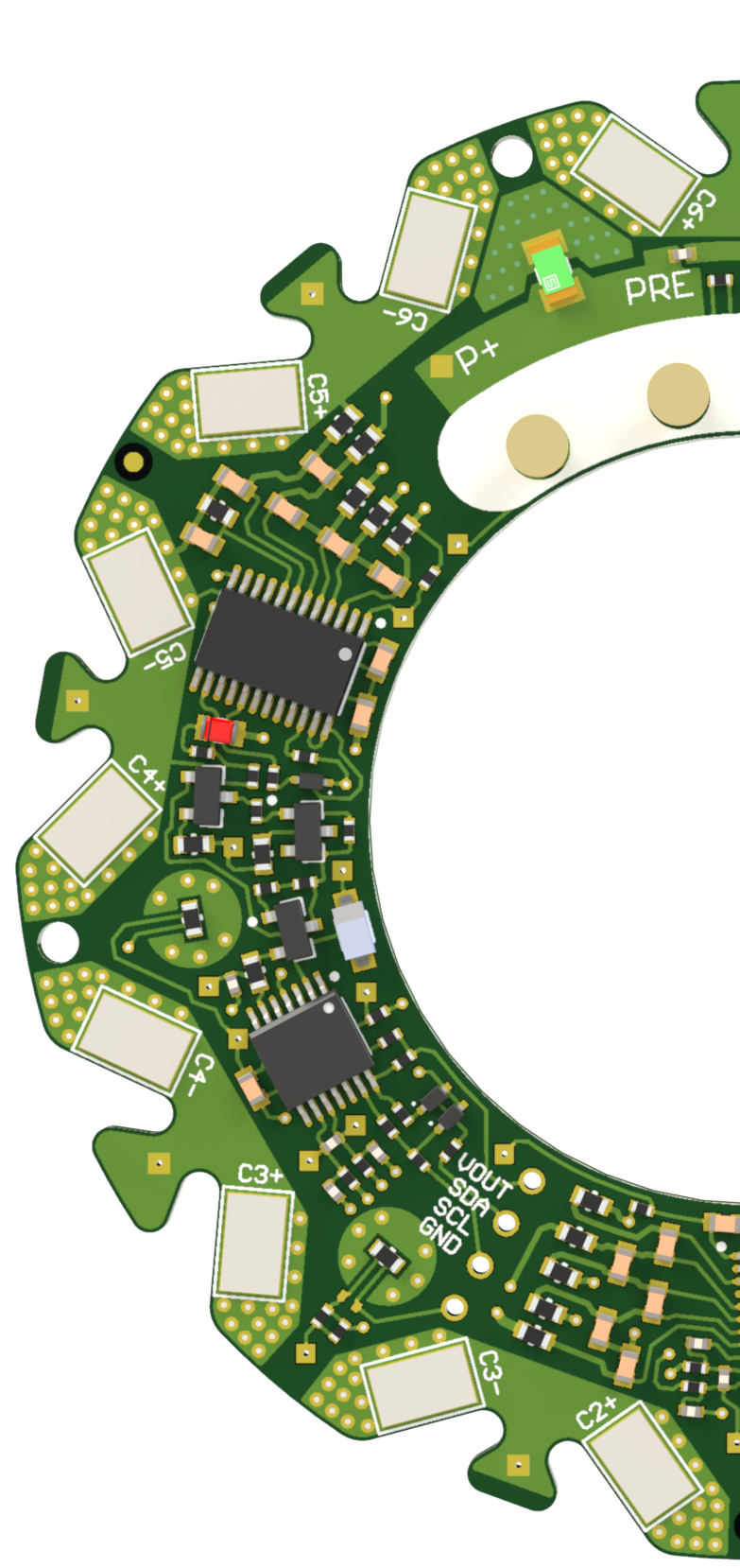
Integration of all BMS functions in a confined space
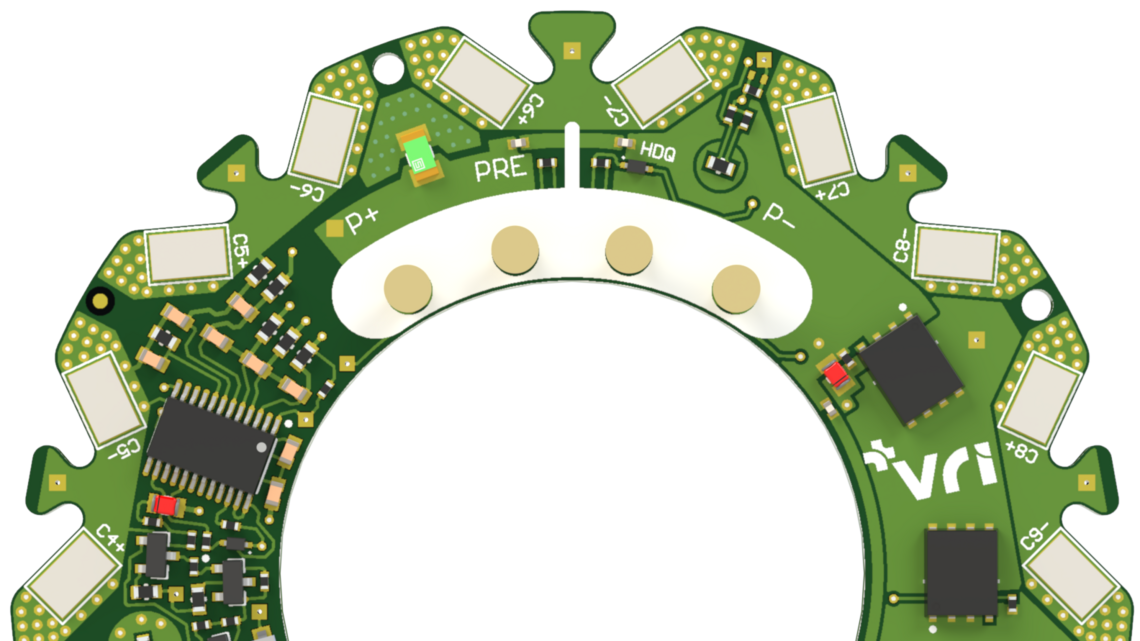
In addition to basic protection and monitoring features, the system also had to incorporate a state-of-charge indicator and 1-wire (HDQ) communication within a compact housing. Combining these functions in such a limited space placed high demands on PCB design as well as mechanical and electrical integration.
Thermal challenge due to high current load
The application requires consistently high discharge currents, leading to thermal hotspots that had to be reliably managed within the compact design – without active cooling.
Compact battery system for cylindrical spindle housing
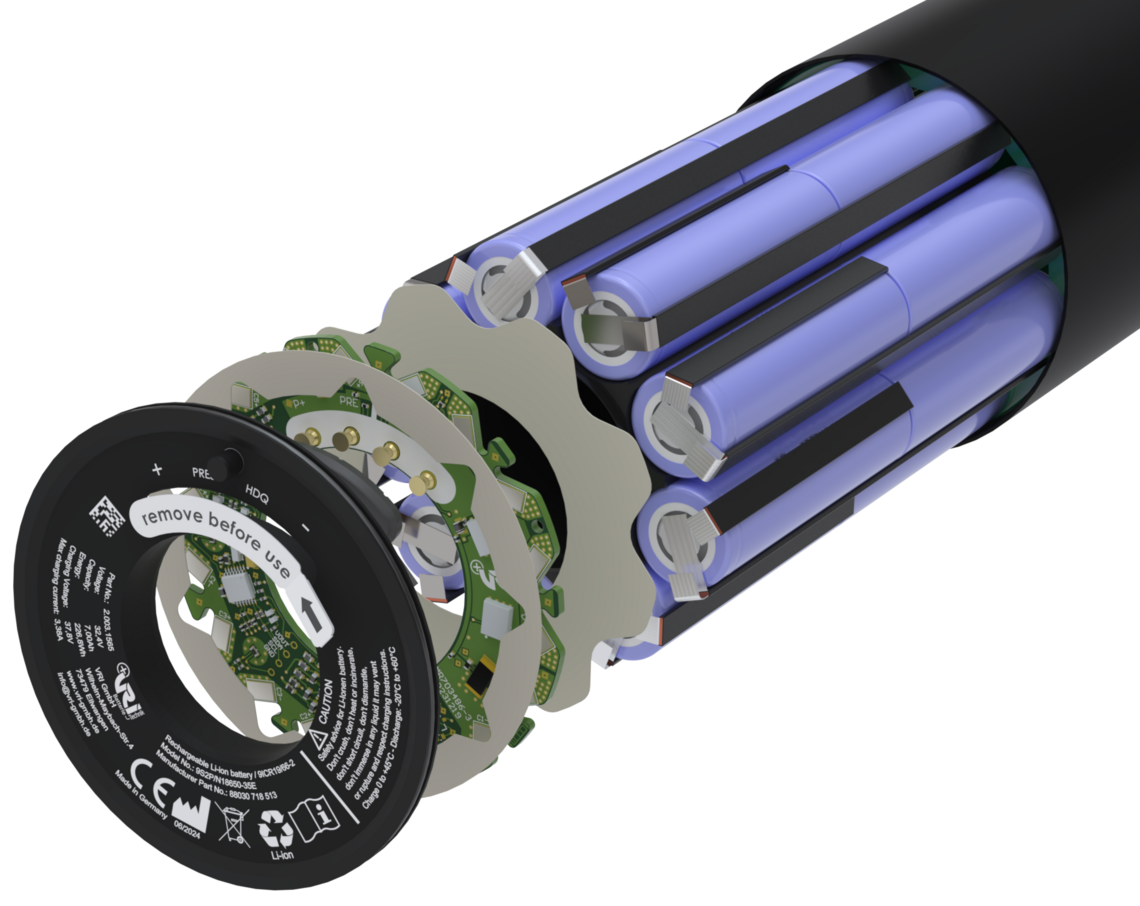
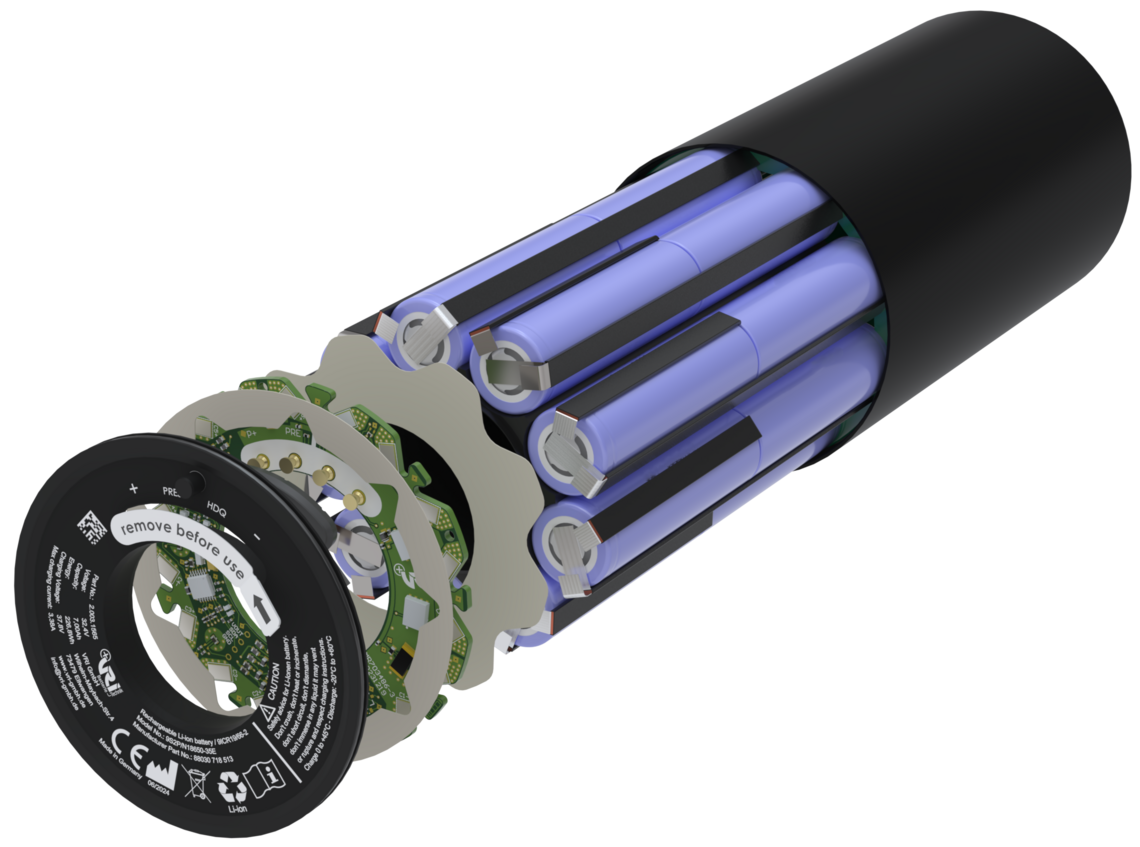
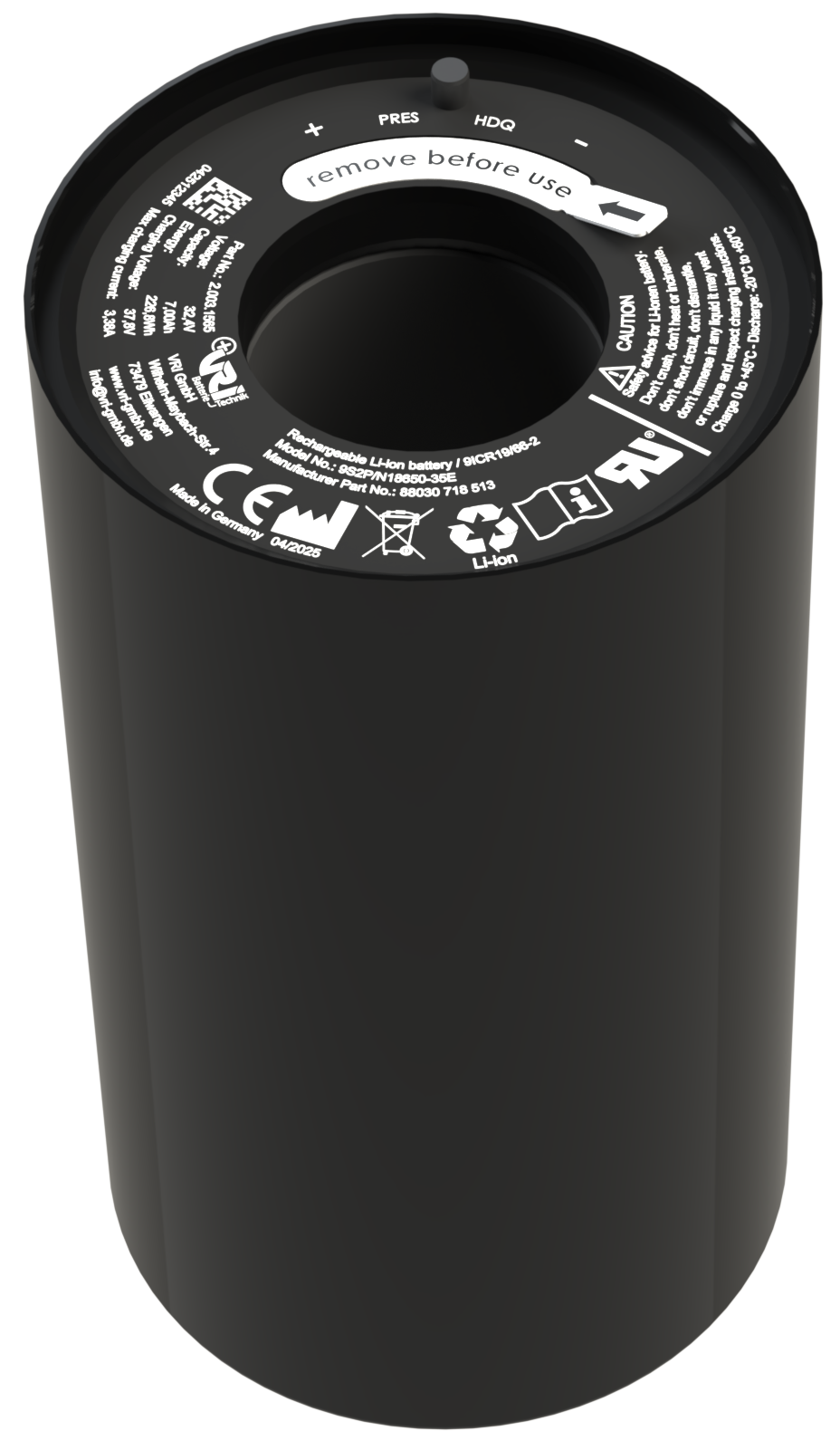
To make optimal use of the cylindrical housing in the Speeder 60 ER11, the cells were arranged in a radial 9S2P layout. The cells are connected using custom-developed copper links:
- Radial 9S2P cell configuration for maximum energy density
- Copper connectors for low-loss current handling
- Compact integration of all electrical connections
The battery management system (BMS) was mechanically and electrically tailored to the housing geometry. All safety-relevant functions were implemented in accordance with IEC 62133:
- Monitoring of all cell voltages and temperatures
- NTC sensors for precise temperature measurement
- Energy-efficient operating modes: sleep and power-down
A dedicated charging station was also developed specifically for the battery system.



We develop custom battery systems – tailored to your application, your standards, and your available installation space.
Steffen Weller
Vertriebsleiter – Sales Director