



Custom batteries: battery pack assembly and manufacturing
VRI manufactures custom batteries and battery packs at its site in Ellwangen (Jagst), from the first prototype through small batches to series production. Depending on the application, we use different rechargeable batteries and cell chemistries as the basis. We connect the cells, integrate protection electronics and BMS, test every pack before delivery and document it down to the cell batch.
Our battery pack assembly is designed for the low-voltage range up to 60 V. The focus is on lithium cells in all commercially available variants. We also process other cell chemistries such as NiMH.
How we develop battery systems and BMS is described on the Development page. This page covers the next step: how a development turns into a finished battery pack for series use.
From prototype to series production
Before a custom battery pack goes into series production, its safety, service life and performance must be right under real operating conditions. That is why almost every project starts with a prototype: you test the battery pack in your device before series production begins. For approvals, we also build battery samples, which are then tested by the responsible test laboratories.
Quick turnaround in prototyping
We stamp connector strips in our own stamping shop. Welding jigs, assembly aids and test equipment are made in our toolmaking shop, on our CNC machine or by 3D printing. This allows us to build prototypes with short lead times.
Series production without a fixed minimum quantity
We have no fixed minimum quantity. We review every request and decide on a project basis how to implement it. We manufacture small batches as well as larger series and set up dedicated production lines for larger projects.
How we assemble battery packs
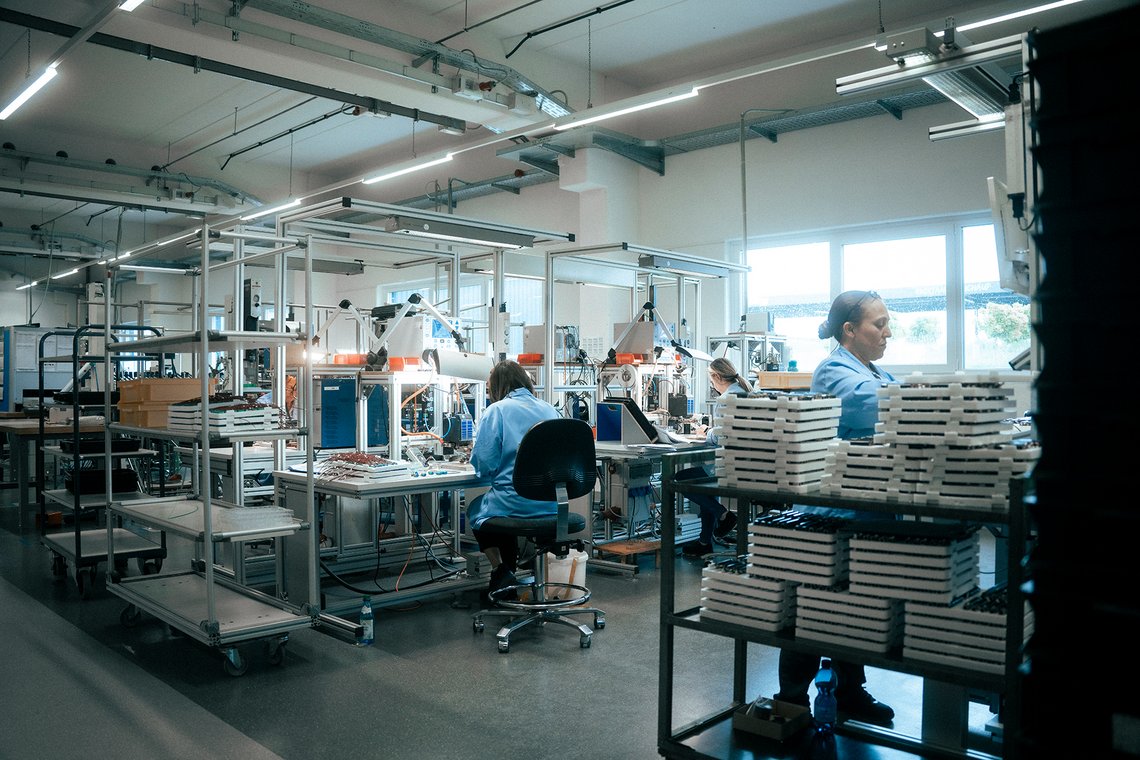
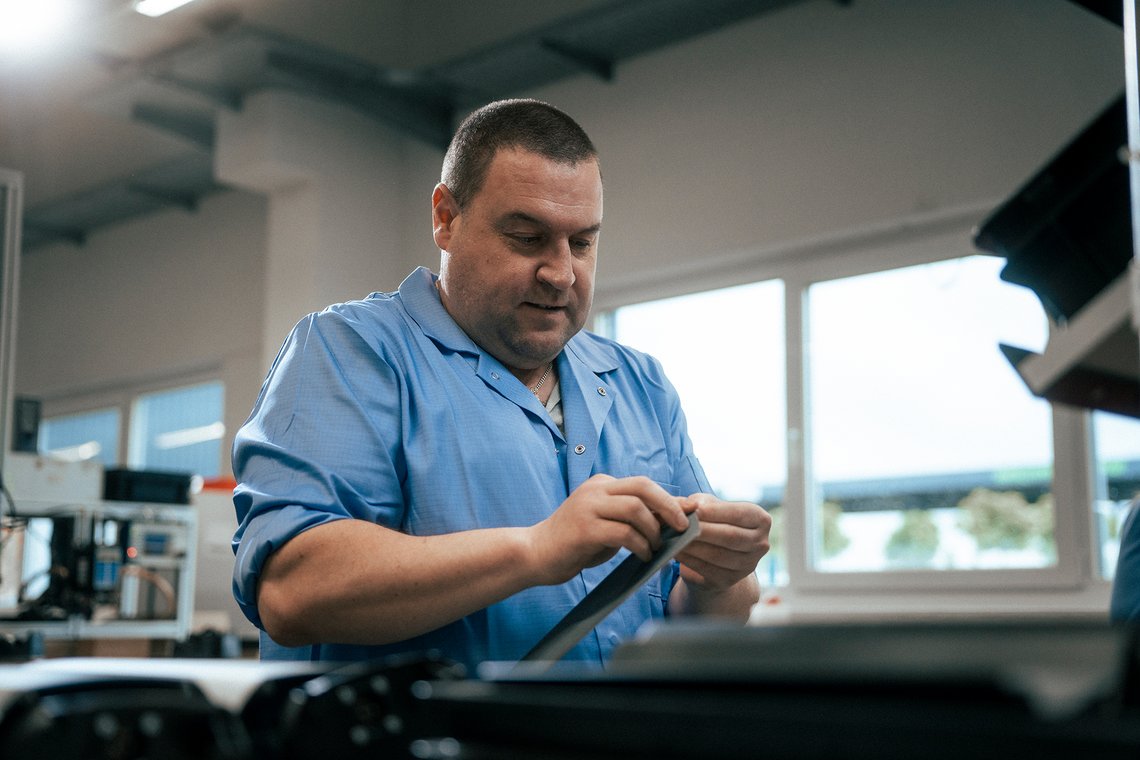
Battery pack assembly takes place entirely in our own production facility, from the cell to the labeled battery pack. We adapt each of the following steps to the size, design and application of the pack.
Processing cells from a single batch
Cells enter our production unmixed, from a single batch. We document which cell batch is installed in which battery pack. On request, we sort the cells by machine according to defined parameters before assembly.
Cell connection: welded or bolted
We attach cell connectors, whether connector strips or system connectors, by resistance welding. In large battery packs, for example for automated guided vehicles, the connection is usually made by busbars bolted to the terminal studs of the cells.
Protection electronics and BMS
Protection electronics and BMS come from our own development, from suppliers or directly from you. On request, we can also implement an in-house design on a shared circuit board with your device electronics. In production, we install the electronics in the battery pack and program and calibrate them where required.
We match the electrical connections and interfaces of the battery pack to your device. On request, we also supply suitable charging technology.
For more information, see charging technology.
Housing, insulation and labeling
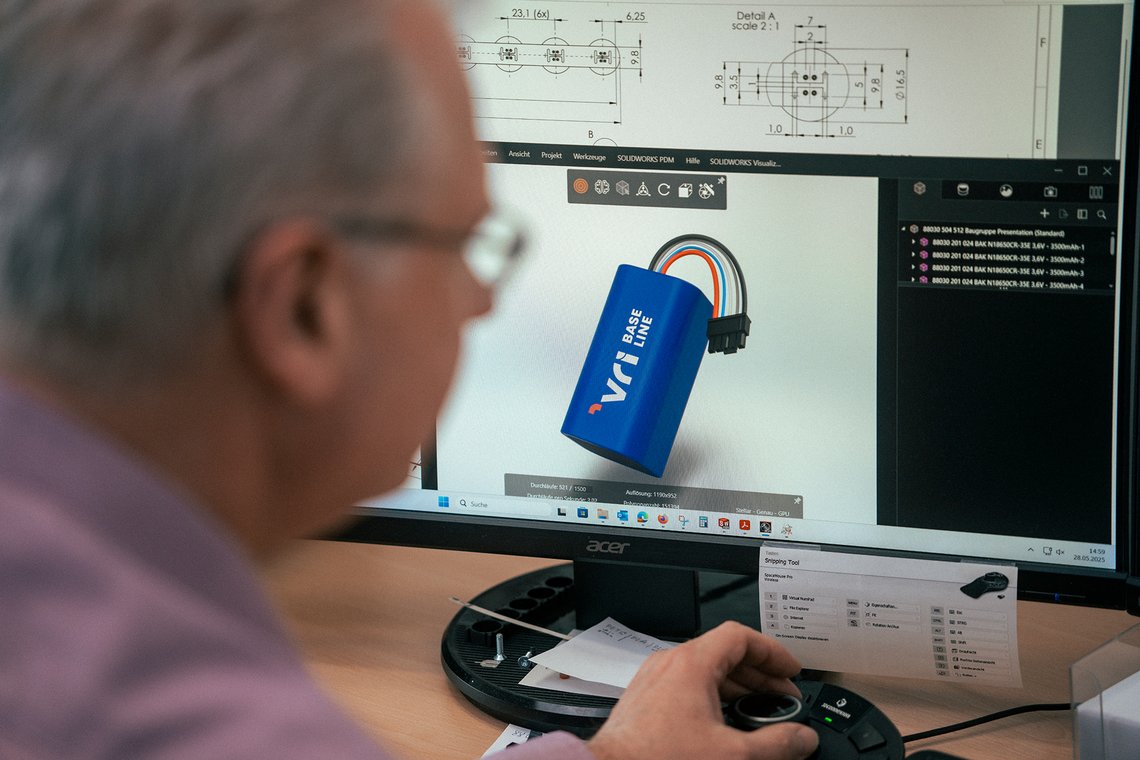
We design housings in CAD to your specifications or use housings supplied by you. Plastic housings of our design are produced for us by partners using injection molding or 3D printing. Depending on regulatory requirements and your preferences, they are closed by ultrasonic welding, bonding, screwing or clip fastening.
For battery packs in automated guided vehicles or tool spindles, for example, we also use aluminum housings. Because aluminum is conductive, the insulation between the cells and the housing receives particular attention here. Packs without a housing are insulated and wrapped in heat-shrink tubing.
We design labels ourselves. We laser-mark metal and plastic housings to your specifications, resistant to abrasion and wiping.
ESD-protected production
Our production is ESD-protected throughout: with dissipative floors, workstations, table mats and transport trolleys as well as ESD clothing, ESD shoes and wrist straps. Our employees receive regular training in ESD protection.
This protects the sensitive electronics of the protection circuit and BMS from electrostatic discharges, which can damage components without the damage being immediately visible.
Testing and traceability
Final testing of every battery pack
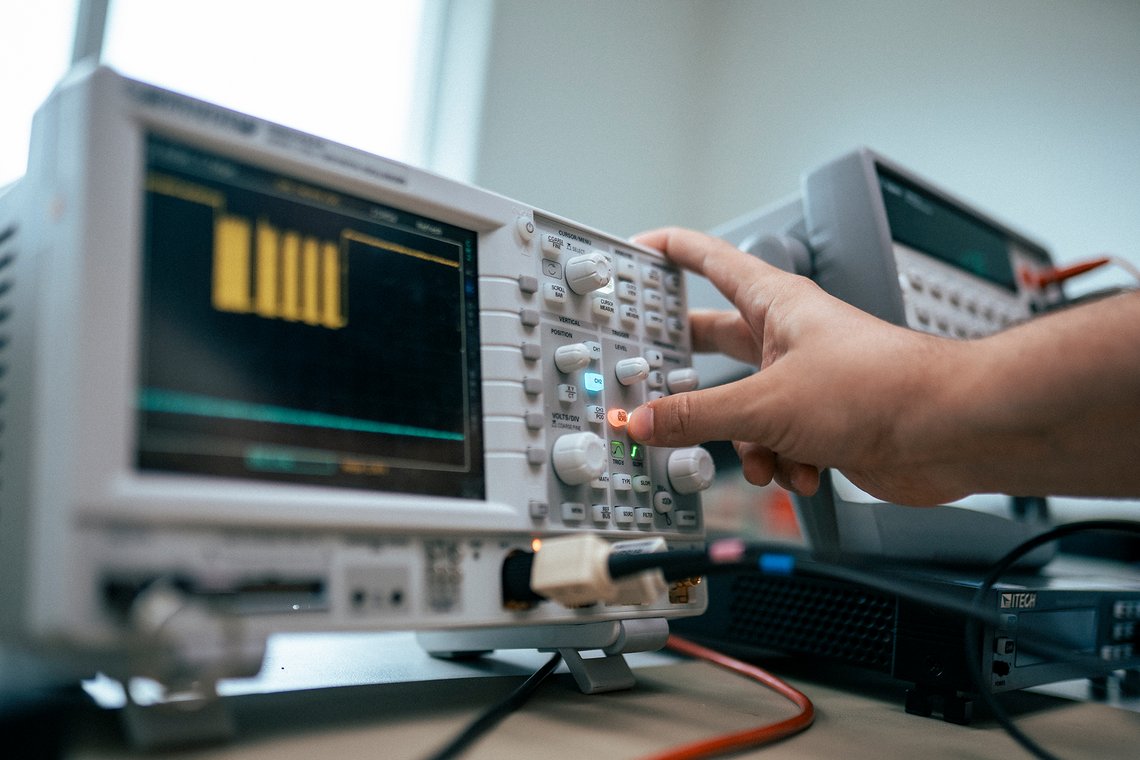
Every battery pack undergoes final testing before delivery, including checks of dimensions and voltage. Battery packs with BMS are additionally tested, without exception, on an end-of-line test system that generates a test report for each pack. In addition, AI-assisted image recognition checks whether all specified components are present and correctly positioned.
We develop the test adapters and test software for end-of-line testing specifically for each battery pack. This way, the system tests exactly the parameters that matter for your pack.
Traceability down to the cell batch
Every battery pack carries a batch number that traces back to the installed cell batches. Unless you opt out, each pack also receives a serial number linked to its BMS. This makes it possible to trace not only the batch but each individual battery pack.

In-house laboratory and accredited test laboratories
In our laboratory, we test battery packs under the conditions of their later use, for example temperature and climate behavior, charging and discharging at low temperatures, service life and state of health. This gives you evidence that the battery pack works for your intended application.
As a result, the battery samples are prepared when they enter standards testing. These tests, for example to UN 38.3, IEC 62133-2 or UL 2054, as well as mechanical tests such as vibration and shock, are carried out by accredited test laboratories. We support the process.
For more information, see Testing & certification.
Certified quality management
VRI is certified to ISO 9001, ISO 13485 and ISO 14001. ISO 13485 is the basis for battery packs in medical technology. The certificates are available under Quality management & certifications.

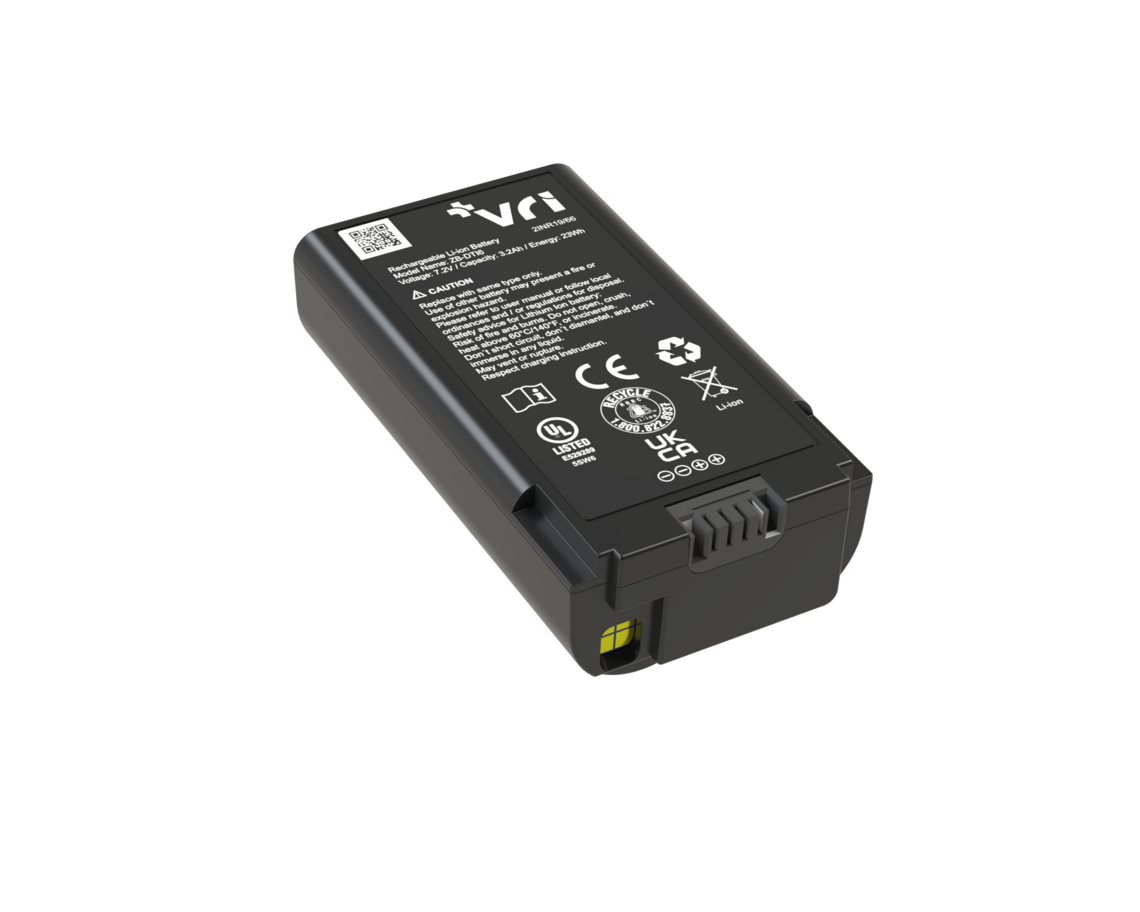

Custom battery packs for different industries
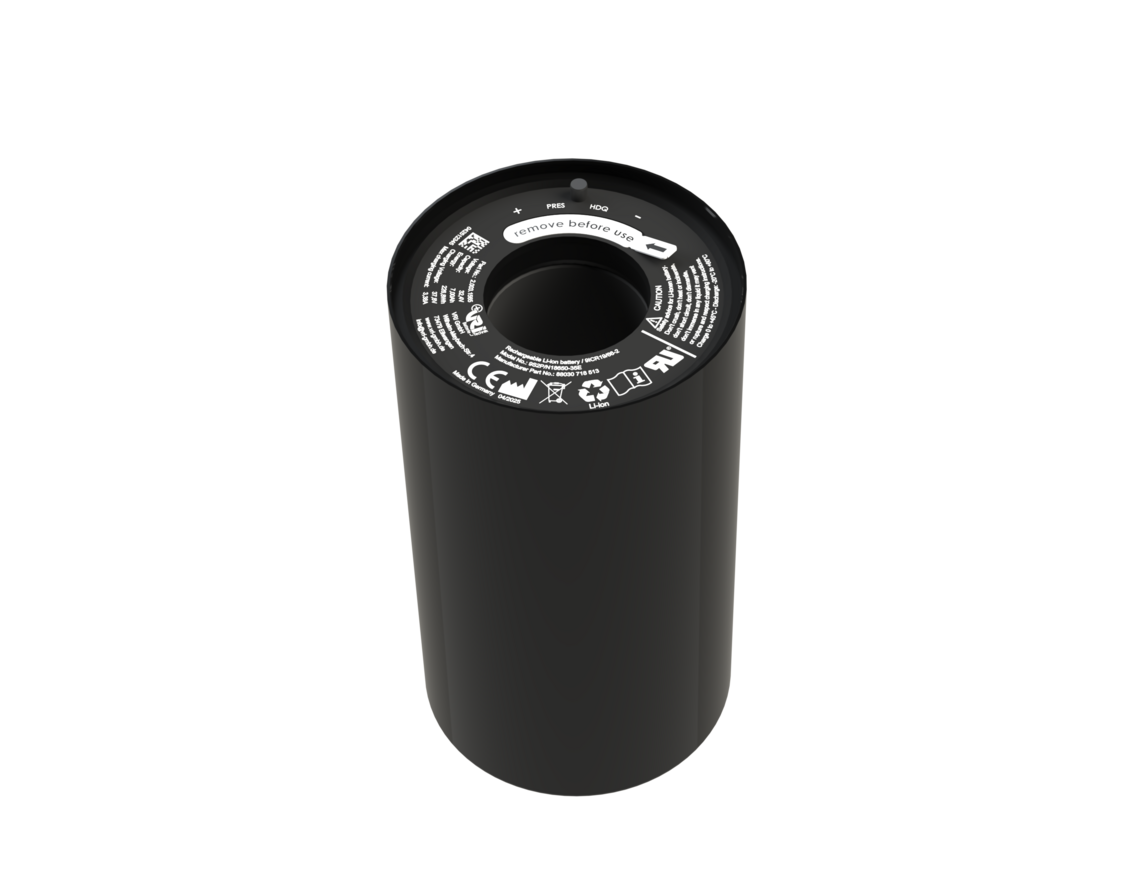
The requirements a battery pack has to meet depend largely on its later use. Custom batteries from VRI are therefore used in a wide range of industrial applications:
- • Automated guided vehicles: Large battery packs whose cells are connected by busbars bolted to the terminal studs.
• Mechanical engineering and automation: Battery packs for tool spindles in aluminum housings, where the insulation between cells and housing is particularly important.
• Medical technology: Battery packs for medical devices, manufactured under a quality management system certified to ISO 13485.
• Sensors and IoT: Compact battery packs with long runtimes for mobile devices.


Frequently asked questions about battery pack assembly
There is no fixed minimum quantity
We review every request and decide on a project basis how to implement it. We manufacture everything from a single prototype through small batches to series production.
Yes, VRI manufactures custom batteries to your technical requirements
A custom build usually starts with clarifying your specific requirements and building a prototype. Production can then move into small-batch or series production as required.
Prototypes are the usual starting point
Most projects start with a prototype that you test in your device. You can enter your requirements directly in the VRI request assistant.
Our production is designed for battery packs up to 60 V
We assemble battery packs in the low-voltage range up to 60 V. Our production is not designed for high-voltage systems above 60 V.
Focus on lithium, plus other common cell chemistries
We process lithium cells in all commercially available variants, including lithium-ion, lithium iron phosphate and lithium-polymer. In addition, we process NiMH as well as NiCd and lead, where their use is permitted. The Rechargeable batteries page provides an overview.
Cell sorting is available on request
We process cells from a single batch from selected suppliers, so pre-sorting is usually not necessary. On request, we sort cells by machine according to defined parameters.
Standards testing is carried out by accredited test laboratories
We build the battery samples, pre-test them in our laboratory and support the procedure at the test laboratory.
The same applies to IEC 62133-2 and UL 2054.
Traceability extends to the cell batch
Every battery pack carries a batch number that leads to the installed cell batches. With a serial number, each individual pack can also be traced.


Send us your requirements or enter them in the VRI request assistant. We will discuss feasibility, prototypes and series planning with you.
Steffen Weller
Vertriebsleiter / Sales Director