


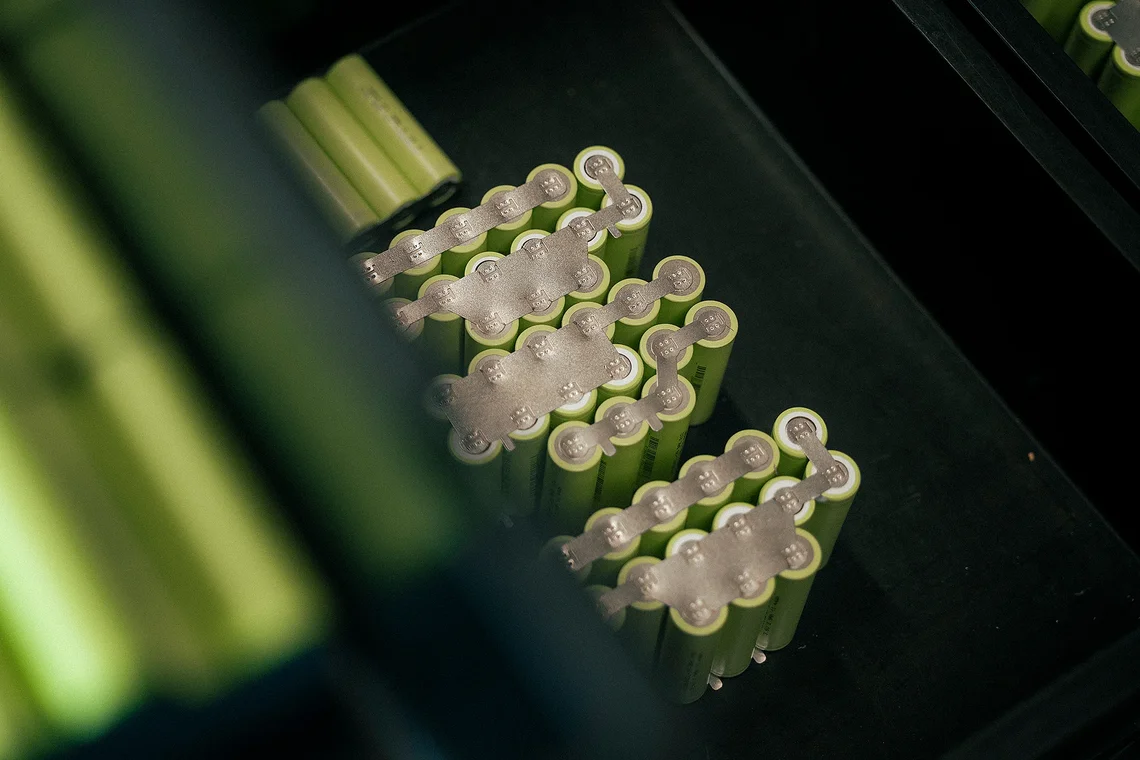

Custom rechargeable batteries and battery pack solutions for industrial applications
Rechargeable batteries form the basis for rechargeable energy systems that can be integrated efficiently, durably, and flexibly into a wide range of applications. As an experienced supplier of rechargeable batteries, we develop and assemble custom battery packs for demanding applications in fields including industry, medical technology, e-mobility , aerospace, military , and IoT .
Our portfolio of brand battery cells







The advantages of rechargeable batteries at a glance:
- Rechargeable energy solution with long service life
- High energy density in a compact design
- Wide selection of cell chemistries and formats
- Integration of protection and charging technology possible
- Sustainable and economical operation
- Operable from -40 °C to +85 °C depending on cell chemistry
Battery pack configuration and assembly
The configuration and assembly of battery packs requires precision and a thorough understanding of cell technology, safety, and later operating conditions. VRI manufactures custom solutions – from prototype to series production – tailored precisely to technical requirements, installation space, and performance profile.
Custom assembly for different application areas
Mobile devices require compact designs and long runtimes; industrial applications above all require durability and operational reliability. VRI therefore always assembles battery packs on an application-specific basis: cell type, design, protection mechanisms, and interfaces are matched precisely to the area of use.
Typical areas of use:
- Medical devices and diagnostic systems
- Automotive and e-mobility
- Logistics solutions and mobile workstations
- Industrial electronics and automation technology
- Communication and sensor technology
- Backup systems and uninterruptible power supplies (UPS)
Technical implementation and system integration
This includes the selection of suitable cell chemistries – from lithium-ionen through LiFePO₄ and lithium-polymer to NiMH, NiCd or lead – as well as the integration of protection and charging technology.
A battery management system (BMS) for monitoring and control is an integral part of many systems. In addition, VRI supports the technical design with regard to charge cycles, temperature behavior, and standard conformity – for example according to IEC 62133 or UN 38.3 – and assists with prototype construction as well as testing under real-world conditions.
How we support you
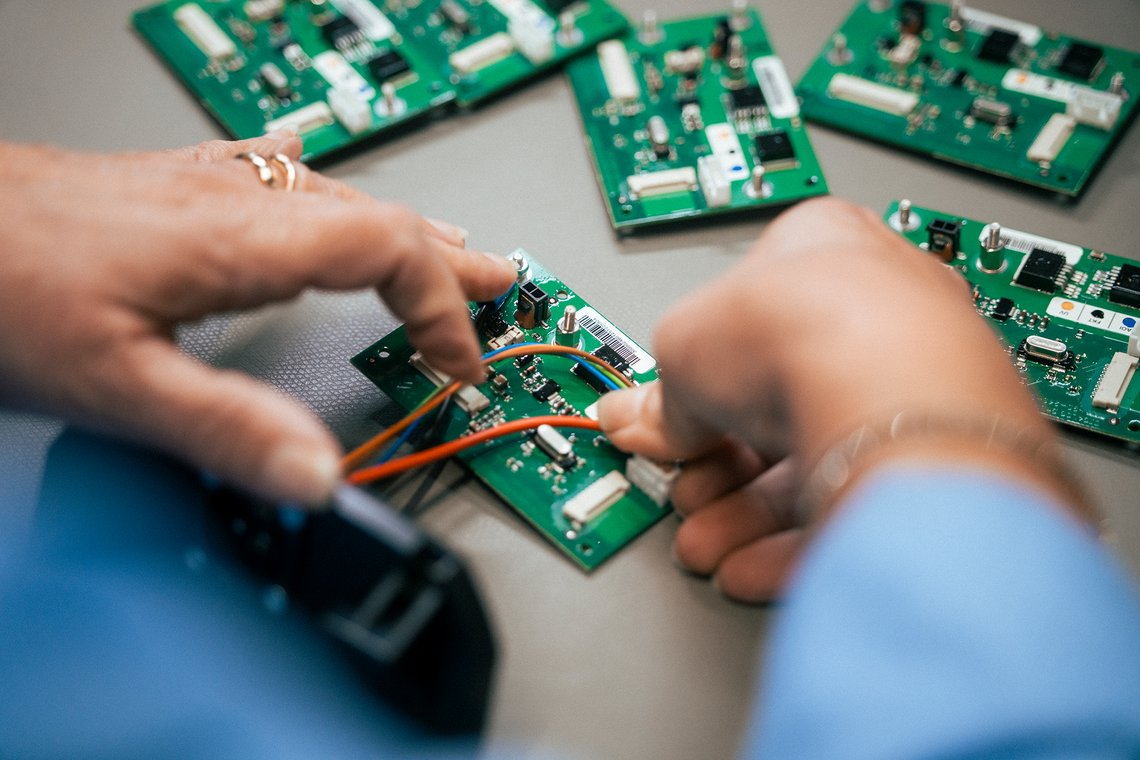
In the development of battery packs, precise requirements for safety, service life, and performance must be met. VRI offers you comprehensive support in selecting suitable rechargeable batteries, integrating the battery management system (BMS), and building your energy storage solution in conformity with standards. We support you with:
- The selection of suitable cell chemistry (e.g. Li-Ion, LiFePO₄, NiMH)
- Consulting on charging technology, battery management system (BMS), and protective devices
- The design according to service life, charge cycles, and environment
- The appropriate technical implementation regarding standards and certifications
- Prototype construction and testing under real-world conditions

Your path to the right battery pack
As an experienced system partner, VRI develops custom rechargeable batteries and battery pack solutions for a wide range of applications – from small series to complex OEM projects. The goal is always the same: an energy solution that is dependable, safe, and economical and that fits your application.


Our experts support you from the first concept idea to the finished rechargeable battery solution. Contact us now for a personal initial consultation – with no obligation and free of charge.
Steffen Weller
Vertriebsleiter / Sales Director
The key rechargeable batteries at a glance
Lithium-ion cells (Li-ion) are powerful, rechargeable secondary cells and have become key energy sources in e-mobility, industrial applications, and consumer products. Their high energy density, compact design, and low self-discharge make them the preferred choice for demanding applications.
Technical advantages at a glance:
- Very high energy density (up to 4× higher than lead-acid)
- High cell voltage: 3.6–3.7 V (charge cutoff: 4.2 V)
- Low self-discharge: < 2% per month
- Can replace up to three NiCd or NiMH cells
Typical applications: e-mobility, medical technology, portable devices, industrial equipment
Rechargeable lithium cells with alternative chemistries complement conventional Li-ion and Li-poly systems wherever compact size, long-term stability, or wide temperature tolerance are essential. Often used in coin cell formats, these cells are based on specialized electrochemical systems such as Li-MnO₂, Li-V₂O₅, or Li-TiS₂. They are known for high reliability, low self-discharge, and long service life in low-power applications.
Your advantages with rechargeable lithium cells (special chemistries):
- Rechargeable and durable – up to 1,000 charge cycles
- Temperature-stable – ideal for industrial use
- Low self-discharge for long deployment times
- Compact coin cell formats available
- Alternative voltage ranges (1.5 V / 2.3 V / 3.0 V)
Technical specifications:
- Nominal voltage: 1.5 V / 2.3 V / 3.0 V
- Chemistries: e.g. Li-MnO₂, Li-V₂O₅, Li-TiS₂
- Cell format: mainly coin cells, some special formats
- Temperature range: –20 °C to +70 °C
- Cycle life: 300–1,000 charge cycles
- Self-discharge: < 2% per month
Typical applications: Storage modules, RTC buffering, wearables, medical devices, measurement technology, and energy-autonomous electronic systems with low power consumption.
More about lithium cells
Lithium polymer cells (Li-poly) are rechargeable secondary cells known for their particularly flexible form factor and high energy density. They can be manufactured extremely flat and in variable shapes—ideal for compact devices and space-sensitive applications.
Technical advantages at a glance:
- Maximum design freedom: ultra-thin (< 1 mm possible)
- Up to 20% higher energy density than classic Li-Ion cells
- Cell voltage: 3.7–3.8 V (charge cutoff: 4.2 V)
- Low self-discharge: < 2% per month
Typical applications: smart cards, wearables, tablets, smartphones, medical technology
Note: Selecting appropriate electrode materials based on application and requirements is crucial—we support you in choosing the right cell chemistry.
Lithium iron phosphate cells (LiFePO₄ / LFP) are among the safest rechargeable cell technologies on the market. They offer high thermal and chemical stability—ideal for applications demanding long life, fast charging, and safety.
Advantages of lithium iron phosphate:
- High safety—no oxygen release in case of malfunction
- Long lifespan: 2,000 to 5,000 charge cycles
- Fast charging capable: high charge/discharge currents (up to 30C)
- Environmentally friendly and recyclable—free of toxic heavy metals
Technical data:
- Nominal voltage: 3.2 V
- Charge cutoff voltage: 3.6–3.7 V
- Temperature range: -40 °C to +85 °C
- Energy density: 150–170 Wh/kg
- Self-discharge: approx. 3% per month
Typical applications: e-mobility, stationary energy storage, industrial applications with high safety requirements
Nickel-metal hydride batteries (NiMH) are reliable rechargeable batteries with a broad range of applications—especially where robustness, temperature tolerance, and environmental friendliness are required.
Advantages of nickel-metal hydride:
- High temperature resistance: -30 °C to +60 °C
- Resistant to deep discharge and overcharging
- More environmentally friendly than NiCd—free of toxic heavy metals
- Available as “Low Self Discharge” (LSD) version
Technical data:
- Nominal voltage: 1.2–1.3 V
- Charge cutoff voltage: up to 1.55 V
- Cycle life: 300–1,000 charge cycles
- Energy density: 50–70 Wh/kg
- Self-discharge: approx. 25% per month (LSD: approx. 15% per year)
Typical applications: medical technology, industrial electronics, mobile devices in harsh environmental conditions
NiCd batteries are especially durable rechargeable cells with high cycle stability and excellent temperature tolerance. Today, they are mainly used in specialized applications—where other cell chemistries reach their limits.
Advantages of nickel-cadmium:
- Highly robust against deep discharge and overcharging
- Long service life: up to 1,500 cycles
- Extremely temperature-resistant: suitable from -40 °C to +60 °C
- Suitable for high charge and discharge currents
Technical data:
- Nominal voltage: 1.2 V
- Charge cutoff voltage: 1.4–1.65 V
- Discharge cutoff voltage: 0.8–1.0 V
- Charge current: 1C – 3C
- Energy density: 50–90 Wh/kg
- Power density: 130–220 W/kg
- Self-discharge: approx. 0.5% per day
Typical applications: emergency and alarm systems, medical equipment, military applications (in compliance with EU exemptions)
Important note:
Due to the presence of cadmium—a toxic heavy metal—the use of NiCd cells in consumer batteries is largely prohibited within the EU. This chemistry is therefore only permitted for specific applications (e.g., emergency lighting, military, medical technology).
Lead batteries (Pb, VRLA, AGM) are among the oldest and most proven rechargeable batteries. They consist of lead dioxide (positive electrode), lead (negative electrode), and diluted sulfuric acid as electrolyte. Classic applications range from emergency power supply to industrial uses.
Modern variants such as VRLA (Valve Regulated lead acid) batteries are maintenance-free and especially safe. They are distinguished by:
- AGM technology: Electrolyte absorbed in glass fiber mat
- Gel technology: Electrolyte immobilized in gel form
Advantages of lead batteries:
- Cost-effective and time-tested
- VRLA models are maintenance-free and leak-proof
- Easily recyclable with established take-back infrastructure
- High performance under heavy load
Technical data:
- Nominal voltage: 2.0 V per cell
- Charge cutoff voltage: 2.4 V per cell
- Discharge cutoff voltage: 1.4–1.75 V (depending on load)
- Nominal charge current: C/20
- Operating temperature: -20 °C to +60 °C
- Cycle life: up to 3,000 cycles
- Energy density: approx. 50 Wh/kg
- Power density: 250–500 W/kg
- Self-discharge: approx. 1–3% per month
Important note:
Lead is a heavy metal with potential health hazards. Batteries containing more than 0.004% lead must be labeled ("Pb") and must not be disposed of with household waste. Proper recycling is legally required.
Rechargeable capacitors—whether classic supercapacitors (EDLC) or lithium hybrid capacitors (LiC)—are specialized energy storage devices known for extremely fast charge/discharge capability and exceptional cycle life. They are ideal for applications with short-term energy demand, frequent load changes, or as a complement to conventional batteries.
Your advantages with rechargeable capacitors:
- Fast charging – fully recharged within seconds
- Extremely high cycle life – up to 1,000,000 charge cycles
- High power density – ideal for short energy bursts
- Maintenance-free and robust – long service life
- Battery-compatible – can be used for power boosting
Technical specifications:
- Nominal voltage: 2.7–3.8 V (depending on cell type)
- Capacity: from a few mF to >500 mAh (depending on format)
- Temperature range: –40 °C to +85 °C
- Energy density: 5–20 Wh/kg
- Power density: up to 10,000 W/kg
- Self-discharge: depending on type, < 3% per month (LiC) to >10% per day (EDLC)
Typical applications: IoT devices, smart metering, data loggers, industrial sensors, medical technology, communications, and backup systems with high current demand.
More about capacitors
